

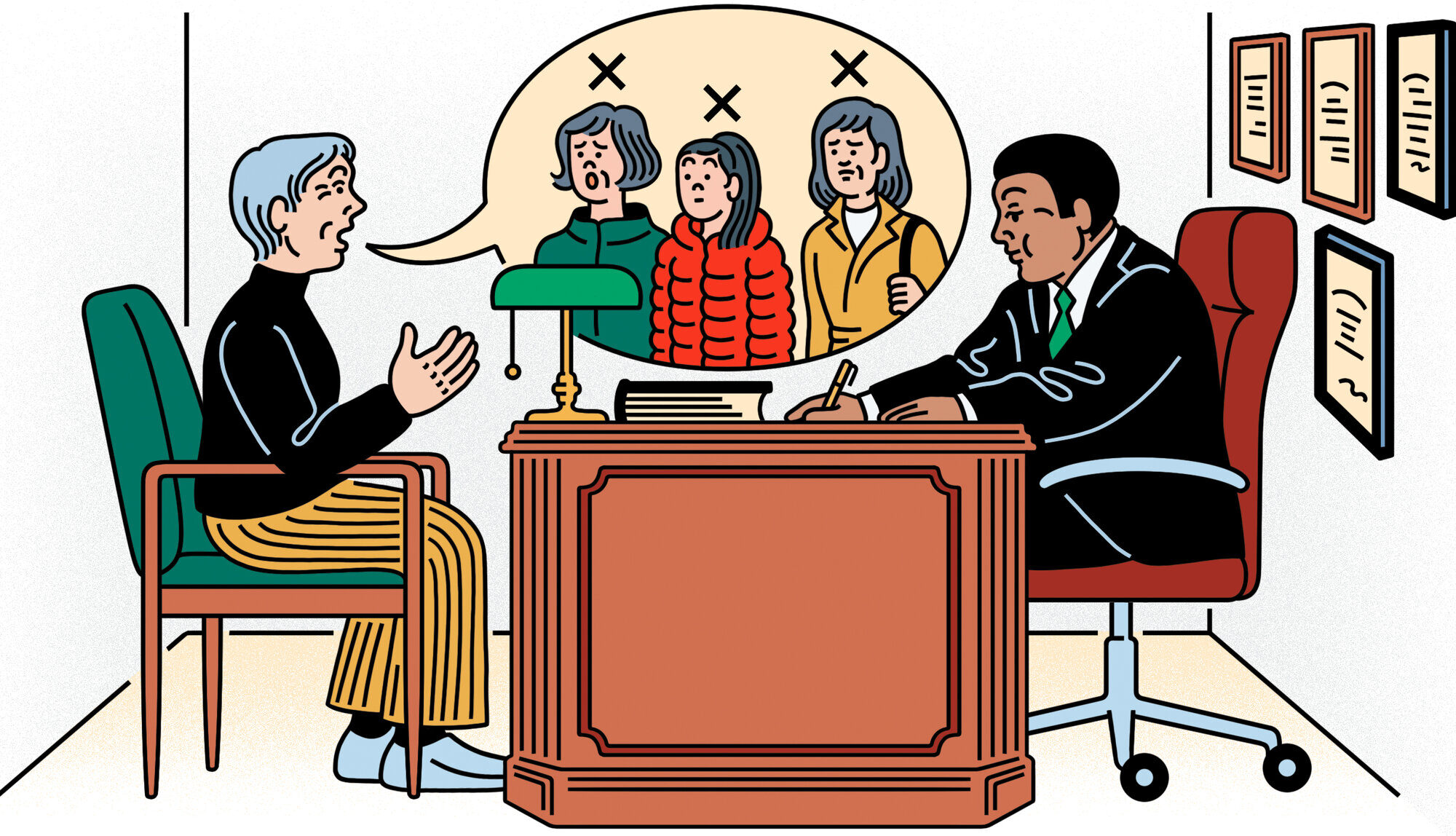
In exceptional cases, exhaustively listed in the law, a person may, by means of their will, exclude their spouse, children, and parents from their estate. Disinheritance, therefore, is the deprivation of the forced heirship (νόμιμη μοίρα) of the legal forced heirs by the testator on a lawful ground. The ground for disinheritance must exist at the time the will is drafted, and the testator must prove the ground invoked, in order to facilitate any subsequent judicial review.
The lawful grounds for disinheritance, as regards descendants (children, grandchildren), are:
a. that they attempted to kill the testator, the testator’s spouse, or another descendant of the testator;
b. that they intentionally caused bodily harm to the testator or to the testator’s spouse;
c. that they are guilty of an intentional felony or serious misdemeanor against the testator or the testator’s spouse;
d. that they maliciously breached a lawful maintenance obligation owed to the testator;
e. that they led a dishonourable or immoral life against the will of the testator.
As regards ascendants, grounds (a), (c), and (d) apply. As regards the spouse, it is sufficient that the testator, at the time of death, had the right to bring a divorce action on a well-founded ground arising from the fault of the spouse.
FREQUENTLY ASKED QUESTIONS ON DISINHERITANCE OF CHILDREN
1. What does disinheritance mean and when is it permitted by law?
Disinheritance is the deprivation of the forced heirship by the testator against a person who would, as a rule, inherit by operation of law (children, grandchildren, parents, spouse). The law permits disinheritance only in exhaustively listed cases, such as an attempt against the life of the testator, the infliction of serious bodily harm, conviction for a felony or serious misdemeanor against the testator or the testator’s spouse, malicious breach of a maintenance obligation, and an immoral or dishonourable life led against the will of the testator.
The ground for disinheritance must exist at the time the will is drafted, must be expressly stated in it, and must be capable of proof. Otherwise, the disinheritance is void and the heir recovers their forced heirship.
2. How can I challenge my disinheritance?
When a child discovers that they have been disinherited by a will, they may file an action challenging the disinheritance before the Single-Member Court of First Instance of the place of inheritance. By means of this action, the existence of the ground invoked by the testator is contested, as is the accuracy of the factual circumstances or the correctness of their invocation.
At the same time, the will itself may also be challenged on grounds of formal defects, incapacity of the testator, mistake, fraud, or duress. If the disinheritance is held void, the heir fully recovers their forced heirship, that is, half of their intestate share.
3. Within what time must I act after the death?
The action challenging the disinheritance is subject to strict time limits. As a rule, the relevant claim must be brought within two years from the publication of the will, while for certain forms of challenge (mistake, fraud) shorter time limits apply, running from the moment the ground for invalidity becomes known.
For this reason, immediate consultation with a lawyer following the publication of the will is critical. If the time limit lapses, the disinheritance becomes settled and the forced heirship is definitively lost, regardless of how well-founded the challenge may have been.
4. What documents and evidence do I need?
The required documents include the published will together with the record of publication, a death certificate, a certificate of next of kin, a certificate confirming that no other will has been published, and title documents for the assets of the deceased. In addition, every form of evidence capable of refuting the ground for disinheritance invoked by the testator is needed.
For instance, if the testator alleges malicious non-payment of maintenance, useful items of evidence include proof of payments, messages, and witness statements. If the testator invokes a conviction for a felony, a criminal record extract is required. The more complete the documentation, the stronger the position of the disinherited party at trial.
5. What are my chances of having the disinheritance annulled?
The chances of success depend chiefly on whether the ground stated in the will falls within the exhaustive grounds set out by law and on the quality of the evidence. The courts construe the provisions on disinheritance narrowly, since this is an exceptional measure that deprives a person of a constitutionally protected right.
It is often found that the ground is vague, insufficiently substantiated, or did not exist at the time the will was drafted. In such cases, the disinheritance is held void. By contrast, where there is a final and irrevocable criminal conviction or clear documentary evidence against the heir, reversal becomes more difficult.
6. What is the role of the lawyer in a disinheritance case?
The lawyer studies the will, identifies weaknesses in the invocation of the ground for disinheritance, examines whether the formal conditions of validity are met, and assesses the prospects of success in court. The lawyer gathers the necessary documents, organises the witness evidence, and files the action within the prescribed time limit.
At the same time, the lawyer represents the heir at every stage of the proceedings and, once the disinheritance is annulled, handles the procedure for acceptance of inheritance and delivery of the share. The Law Firm ZIAMPARAS D. & Associates undertakes inheritance law cases with a holistic approach, from the initial assessment to the full restoration of the client’s rights.