

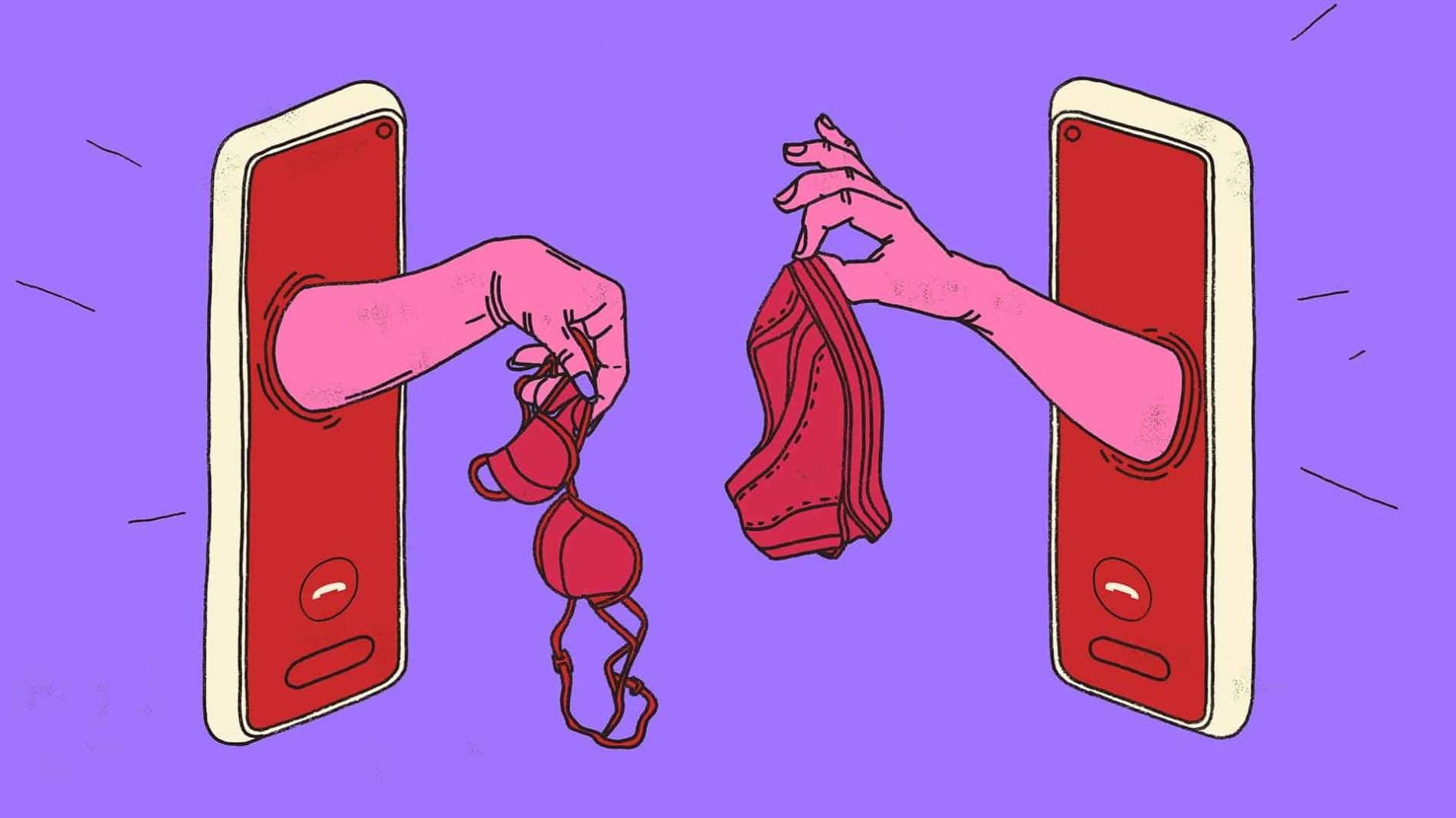
In sexting and sextortion the distinction is subtle and must be properly understood in order to determine the appropriate legal response.
Sexting
Sexting is a particular form of online conduct. It is a relatively recent phenomenon involving the sending of nude or semi-nude photographs via mobile phone or other electronic device to another person. It must be emphasised at the outset that sexting as such does not in itself constitute a criminal offence. Criminal liability arises when the conduct exceeds lawful limits and amounts to the distribution of child pornography material (Article 348A of the Penal Code (PK)).
Sextortion
Sextortion (sexual extortion) is a form of sexting that may give rise to serious consequences. The term derives etymologically from the English words “sex” and “extortion”, meaning, in essence, sexual blackmail. It is the offence that combines sexual conduct with extortion.
Various behaviours may be characterised as sextortion. To put it more clearly, one interpretation is the use of sexual messages, photographs or videos for the purpose of manipulating or coercing someone into producing further sexual photographs or videos, or into meeting in person for sexual intercourse. Another scenario is that many perpetrators use the material they collect from their victims in order to manipulate them and extract money from them.
Sexting & Sextortion – Legal Response
- Felony: Distribution of child pornography material, Article 348A of the Penal Code.
- Misdemeanor: Offence against sexual dignity, Article 337 of the Penal Code.
- Misdemeanor: Insult, Article 361 of the Penal Code.
- Tort: Article 57 of the Civil Code – right to personality.
- See also article Child Pornography
- See also article Defamation via Facebook
- See also article Online Fraud
- See also article Computer Fraud
- See also article Hacking
- See also Methods of Online Attacks
- See also article Malicious Software
- See also article Online Attacks
- See also article Online Piracy
- See also article Software Piracy
- See also article Pharmaceutical Trafficking
- See also article 10 Security Practices
FREQUENTLY ASKED QUESTIONS ON SEXTING – SEXTORTION LEGAL RESPONSE
1. I am being blackmailed with my nude photographs — what should I do?
The first and fundamental rule is: do not respond to the perpetrator and do not send any money. Paying does not stop the extortion; on the contrary, it encourages further demands. Preserve all messages, screenshots of conversations, profile names, bank account numbers and cryptocurrency wallet addresses to which transfers were requested. Do not delete anything, even if you feel ashamed. Then contact a lawyer immediately to file a criminal complaint. Such conduct constitutes extortion (Article 385 of the Penal Code (PK)), offence against sexual dignity (Article 337 PK) and, depending on the circumstances, breach of personal data legislation.
2. Where do I file a criminal complaint for sexual extortion?
The criminal complaint is filed with the Public Prosecutor’s Office at the Court of First Instance in your place of residence, from where the case file is forwarded to the Cybercrime Prosecution Division of the Hellenic Police for investigation. Alternatively, you may file a report directly with the Cybercrime Prosecution Division, which has specialised personnel for identifying perpetrators, even when they use fake profiles or operate from abroad, and which cooperates with Europol and Interpol on cross-border cases. It is important that the complaint be drafted by a lawyer, so that the offences are described with legal precision and the appropriate investigative measures are immediately requested, such as the lifting of communications privacy and the freezing of the perpetrator’s electronic accounts.
3. Can a perpetrator hiding abroad be identified?
Yes, in many cases this is feasible. The Cybercrime Prosecution Division has the capacity to request data from providers such as Meta, Google and Microsoft, as well as from banks and cryptocurrency exchanges through judicial assistance. When funds have been transferred to a Greek bank account or to a “money mule” account, identification is usually swift. In cases involving perpetrators in EU member states, the rules of judicial cooperation apply. Even in non-EU countries, bilateral conventions exist. Speed of action is critical: the sooner a data preservation order is issued, the higher the chances of identification.
4. How long do criminal proceedings in a sextortion case last?
From the filing of the complaint to the preliminary examination, several months usually elapse, depending on the workload of the Public Prosecutor’s Office. The phase of preliminary investigation and identification of the perpetrator may last from six months to two years, particularly in cross-border cases. The trial itself, if the perpetrator is identified, usually follows 1–3 years later. In parallel, a civil lawsuit may be filed for pecuniary compensation for moral damages (Articles 57 and 932 of the Civil Code (AK)), which is heard independently of the criminal proceedings.
5. What compensation am I entitled to as a victim of sexual extortion?
You are entitled to pecuniary compensation for moral damages arising from the violation of your personality rights (Article 57 AK) and tort (Articles 914 and 932 AK). The amount is determined by the court and depends on the severity of the violation, the publication of the material, the psychological consequences and the financial circumstances of the parties. In serious cases, awards range from a few thousand to several tens of thousands of euros. Furthermore, if money was paid to the perpetrator, it can be reclaimed as unjust enrichment. Recovery, however, depends on the perpetrator’s financial position once identified.
6. What is the role of the lawyer in a sextortion case?
The lawyer undertakes the collection and preservation of digital evidence in a manner that ensures its admissibility in court, drafts a well-founded criminal complaint, monitors the case file with the Cybercrime Prosecution Division and the Public Prosecutor’s Office, and immediately requests investigative measures to identify the perpetrator. In parallel, the lawyer files a civil action for pecuniary compensation and, where necessary, an application for interim measures for the immediate removal of the material from online platforms. Our firm, with many years of specialisation in cybercrime, handles such cases with absolute discretion, while protecting the client’s public image and psychological well-being.