

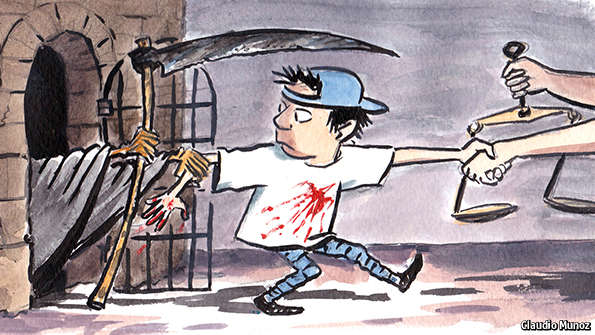
Juvenile Criminal Law: Legal Defence Guided by the Child’s Future
Involvement with the prosecuting authorities during adolescence can leave a lasting mark on a young person’s life. At ZIAMPARAS & ASSOCIATES, we understand that behind every juvenile case file there is a family in distress. Our approach combines legal rigour with pedagogical sensitivity, always aiming at rehabilitation and protection.
Why our approach stands out
In the modern era, juvenile delinquency has shifted to a great extent into the digital world.
-
Technical Understanding: As lawyers with a background in Computer Engineering, we possess the unique ability to analyse cases of cyber-bullying, digital extortion or unlawful distribution of material — areas where traditional legal knowledge is often insufficient.
-
Strategy of Reformative Measures: We focus on making full use of the reformative measures provided for by law, seeking to avoid confinement and to secure a clean criminal record for your child.
Cases We Handle:
-
Digital Delinquency: Bullying on social media, breaches of personal data and online fraud committed by minors.
-
Acts of Violence & Brawls: Legal representation in incidents of football-related violence or school fights.
-
Property Offences: Theft, criminal damage to third-party property and unlawful possession.
-
Narcotic Substances: Defence of minors in cases of possession or supply of controlled substances, with emphasis on therapeutic treatment.
“A minor is not a ‘little criminal’, but a young person who needs proper guidance and a second chance. Our mission is to ensure that this single error will not define the rest of their life.”
Our Process:
-
Personal Meeting: We speak with the minor and the parents in an environment of trust.
-
Case File Analysis: We examine every witness statement and every digital exhibit.
-
Representation: We appear before the Investigating Judge for Minors and the Single-Member or Three-Member Juvenile Court with vigour and full preparation.
In greater detail:
The moment a parent learns that their child is facing the law is one of the most difficult experiences a family can endure. Fear for the future, anxiety as to whether the child will be stigmatised, and countless questions about the judicial process create an environment of intense pressure.
In our office, we recognise that juvenile criminal law is not merely a legal procedure, but a critical turning point in a young person’s life. As specialised lawyers for minors, we combine deep knowledge of the Penal Code (PK) with experience in handling family dynamics, offering a defence that protects both the legal rights and the psychological wellbeing of the child.
Below are the 7 most frequent questions every parent has when a criminal prosecution of a minor begins.
1. Will my child go to prison? The reality of detention for minors.
This is the foremost fear. The answer lies in the philosophy that governs juvenile criminal law in Greece: the law does not seek punishment, but reintegration and protection.
In the vast majority of cases, confinement in a reformative institution (the equivalent of prison for minors) is a measure of last resort and is imposed only for exceptionally serious felonies involving violence. The juvenile judge almost always prefers what are known as reformative measures. These may range from a simple reprimand to entrusting custody to the parents or attending counselling programmes. As a specialist criminal defence lawyer, our objective is to demonstrate to the court that the child has a supportive environment which guarantees an improvement in conduct without the need to deprive them of their liberty.
Criminal law divides minors into three categories according to age: up to the age of 12, any act committed by minors is criminally irrelevant; from the completed age of 12 up to 15 years, reformative or therapeutic measures may be imposed depending on the gravity of the act and the minor’s mental condition; and from the completed age of 15 up to 18 years, confinement in a special juvenile detention facility may be imposed under certain conditions, only exceptionally and as a last means of correction.
Practice consistently confirms that confinement results in the minor being marginalised, stigmatised, deprived of family affection, mixing with other ‘criminals’, and obstructed in their smooth social reintegration. All these factors ultimately make criminal recidivism highly likely.
Reformative measures are administrative in nature and aim at the moral and social improvement of offenders and at their social reintegration. They are described in Article 122 of our Penal Code (PK) and are the following: (a) reprimand of the minor; (b) entrusting responsible custody of the minor to the parents or guardians; (c) entrusting responsible custody of the minor to a foster family; (d) entrusting custody of the minor to protective associations, juvenile institutions or juvenile probation officers; (e) reconciliation between the juvenile offender and the victim for the purpose of expressing apology and, more generally, for the extra-judicial settlement of the consequences of the act; (f) compensation of the victim or otherwise removing or reducing the consequences of the act by the minor; (g) attendance of social and psychological programmes at state, municipal, community or private bodies; (h) enrolment in vocational or other educational or training schools; (i) attendance of special road safety programmes; (j) provision of community service; (k) entrusting the custody and supervision of the minor to protective associations or juvenile probation officers; and (l) placement in an appropriate state, municipal, community or private reformative institution.
2. Will my child’s criminal record remain “tainted” forever?
Concern about the child’s professional career and future is entirely justified. However, the criminal record of minors operates under different rules from that of adults.
Convictions involving reformative measures are generally not entered on general-use criminal record extracts (those requested by employers). The law protects the minor, ensuring that an error of youth will not follow them as a “stigma” into adult life. With proper legal guidance, we can ensure that the proceedings will have the minimum possible impact on your child’s image in society.
3. Am I, as a parent, also at risk of criminal prosecution? (Neglect of supervision of a minor)
It is very common, alongside the prosecution of the child, for criminal proceedings against the parent to be brought for the offence of neglect of supervision of a minor (Article 360 of the Penal Code (PK)). The law assumes that, where a minor commits a punishable act, the parents may not have properly discharged their duties.
Here, the role of the lawyer is twofold. The lawyer must defend the parent by demonstrating that the child’s act was an isolated incident not attributable to any lack of care or guidance. Our experience shows that highlighting a stable family structure usually leads to the acquittal of the parents.
4. What is the procedure at the Juvenile Court and what should we expect?
The courtroom procedure for a minor differs radically from ordinary trials. It is conducted “in camera”, without the presence of the public, in order to protect the psychological balance and privacy of the young person.
In the courtroom there are present the Juvenile Judge, the public prosecutor, the juvenile lawyer, the parents and the Juvenile Probation Officer. The Probation Officer plays a decisive role, as they draw up a report on the minor’s personality and environment. We prepare the child and the family for this contact, so that a sincere and well-grounded picture is presented, one that will assist in a favourable outcome for the case.
5. Is there a way to avoid trial? (Penal mediation and abstention from prosecution)
Modern juvenile criminal law places great emphasis on avoiding the trauma of a trial. There are procedural tools that allow the prosecutor to abstain from criminal prosecution, imposing certain reformative measures without the case ever reaching the courtroom.
This “out-of-court” resolution requires strategic handling by an experienced criminal lawyer. Timely intervention and the filing of a comprehensive memorandum highlighting remorse and the restoration of damage can “close” the case at the investigation stage, sparing the child a psychologically draining process.
6. How is our privacy at risk? Will the school or the neighbourhood find out?
Anonymity is a fundamental right in juvenile law. The publication of information capable of identifying a juvenile defendant is strictly prohibited by law and by professional ethics.
As professionals with experience also in online journalism, we know how to safeguard the communication aspect of a case. The school or wider social circle is not officially notified of the prosecution, unless the very nature of the offence requires intervention within the educational setting. In every case, discretion is our inviolable rule.
7. Why is a specialised juvenile lawyer essential?
Many wonder whether a “general” criminal lawyer can handle the case. The truth is that the defence of minors requires more than legal knowledge: it requires a pedagogical approach, the ability to communicate with adolescents and an understanding of the sociology of crime.
A specialised lawyer does not speak only in court; they also speak to the heart of the child in order to understand the “why” behind the act. It is this deep understanding that allows us to persuade the judge that your child deserves a second chance. Our legal presence is the shield that ensures your child’s rights will be respected at every stage of the pre-trial and main proceedings.
Conclusion
The criminal prosecution of a minor is a marathon that demands composure, accurate information and strong legal representation. In our office, we approach every case with the humanity the situation demands and the professional competence that guarantees the best possible outcome.
Do not leave your child’s future to chance. If your child is facing problems with the law, contact us for a confidential consultation. Together we will design the strategy that will protect your family and give your child the chance to move forward, leaving this ordeal behind.
- See also article Juvenile Defendants
- See also article Minors as Distributors of Child Pornography
- See also article Criminal Law
FREQUENTLY ASKED QUESTIONS ABOUT LAWYERS FOR JUVENILE OFFENDERS
1. Is my child at risk of being placed in a reformative institution?
Confinement in a special juvenile detention facility is a measure of last resort and is imposed only in exceptionally serious felonies involving violence. For minors under the age of 12, acts are criminally irrelevant, while from 12 to 15 years of age only reformative or therapeutic measures are imposed. From 15 to 18 years, confinement is an exceptional option. In most cases, the judge opts for the reformative measures of Article 122 of the Penal Code (PK), such as a reprimand, entrusting custody to the parents, attending counselling programmes or community service. The objective of the defence is to highlight the supportive family environment which guarantees rehabilitation without deprivation of liberty.
2. What can I do to avoid the trial?
Juvenile criminal law provides tools that allow the courtroom to be avoided. The Juvenile Prosecutor may abstain from bringing criminal prosecution, imposing reformative measures without judicial determination. Furthermore, penal mediation between the juvenile offender and the victim, with an expression of apology and restoration of damage, is a powerful means of extra-judicial settlement. The timely filing of a comprehensive memorandum documenting remorse, compensation of the injured party and the minor’s participation in psychosocial programmes can lead to the case being shelved at the pre-trial stage, sparing the child the psychological burden of a trial.
3. How long do proceedings at the Juvenile Court take?
The duration depends on the nature of the act and the stage of the case. For misdemeanours, hearings before the Single-Member Juvenile Court are usually completed within six months to a year of the prosecution being brought. For felonies, which are tried by the Three-Member Juvenile Court, the pre-trial proceedings before the Investigating Judge for Minors may last several months. Before the main proceedings, the Juvenile Probation Officer prepares a social report, a process which requires additional time. Faster resolution is achieved through abstention from prosecution or penal mediation at an early stage.
4. What documents and evidence does the defence need?
Preparation requires school reports and certificates of attendance, which highlight the minor’s performance and conduct, certificates from sports or cultural clubs, medical opinions or psychological reports where available, as well as biographical information about the family. In cases of digital delinquency, technical analysis of the electronic exhibits, social media accounts and conversations is required. Also useful are documents proving attendance of counselling programmes and compensation of the victim, which establish remorse and strengthen any request for milder reformative measures.
5. Will the child’s criminal record and future be affected?
The criminal record of minors is governed by different rules to that of adults. Reformative and therapeutic measures are generally not entered on general-use criminal record extracts requested by employers or public services. The legislator protects the minor, so that an error of adolescence does not stigmatise them in adult life. At the same time, proceedings are conducted in camera and the publication of identifying information about a juvenile defendant is strictly prohibited. With proper handling, the long-term consequences for the child’s professional and social path are kept to a minimum.
6. What is the lawyer’s role in such cases?
The lawyer represents the minor at all stages, from the preliminary investigation and the defence statement before the Investigating Judge for Minors through to the courtroom of the Single-Member or Three-Member Juvenile Court. They analyse the case file, challenge unlawful evidence — particularly in cases of digital delinquency — and raise standalone pleas and mitigating circumstances. They cooperate with the Juvenile Probation Officer in drafting a favourable social report and prepare the family. At the same time, they also defend the parents if they are prosecuted for neglect of supervision of a minor (Article 360 of the Penal Code (PK)), demonstrating that parental duties have been adequately discharged.