

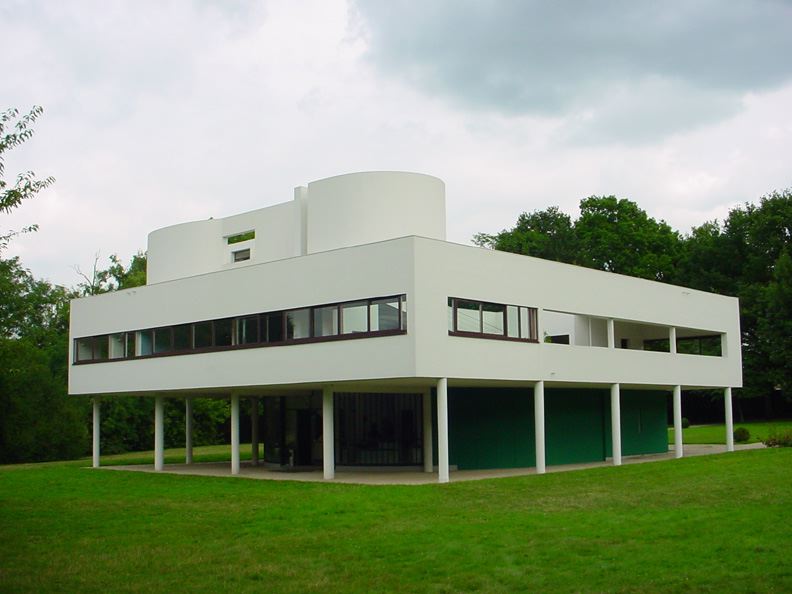
Open car parking spaces on the pilotis (ground-floor open level) of an apartment building cannot be the object of separate horizontal property. Numerous problems arise in the daily coexistence of co-owners within the space of an apartment building — a setting of frequent friction, as the abundance of court rulings from courts of substance and from Areios Pagos (AP) reveals. These problems arose mainly due to the mandatory provision of parking spaces within apartment buildings.
In order to accommodate the parking needs of the increasing number of cars owned by city residents, Law 960/1979 “on the imposition of obligations for the creation of parking spaces for the service of buildings“, as amended and in force following Law 1221/1981, made the provision of parking spaces in every new building a precondition for the issuance of a building permit (Article 3 of the Law). These parking spaces may be located on the pilotis, in the basement, in the open courtyard, or in another building.
The question that arises is what the proprietary status of these spaces within the apartment building is.
1. As regards enclosed spaces, it has been judicially established and is consistently accepted that, whether they are located on the ground floor of the building — these are the so-called fully enclosed parking spaces on the pilotis — or in the basement, they may constitute objects of separate horizontal property and are therefore not common areas or jointly owned parts of the building.
2. As regards merely covered parking spaces, e.g. spaces marked with painted lines in the basement of the apartment building, these may also constitute autonomous horizontal properties. The provisions of Article 1, paragraph 5, sentences a’ and b’ of Law 960/1979, as replaced by Article 1 of Law 1221/1981, provide that, with respect to parking spaces situated in covered areas of a building subject to the regime of horizontal property, each parking space may constitute a separate horizontal property which may be transferred independently, even to third parties unrelated to the building.
3. We come now to the last and perhaps most interesting matter, parking spaces on the pilotis. According to the final sentence of Article 1, paragraph 5 of Law 960/1979, as replaced by Article 1 of Law 1221/1981, “any parking spaces created in the free ground-floor space of a building when the latter is constructed on columns (pilotis) under the applicable provisions cannot constitute separate horizontal properties”. That is, this provision establishes that, where a building is erected under a permit and under the urban planning regime that leaves the ground-floor space uncovered, this uncovered space cannot constitute separate horizontal properties belonging to one or more owners — whether they are unit owners or third parties — nor is it susceptible to the establishment of any real right; rather, it shall remain as a common area, over which all unit owners automatically acquire compulsory co-ownership in proportion to their share, and which serves the common use of all unit owners, the only matter on which they may decide being its specific allocation.
In sum, therefore, the open sections of the pilotis and the open car parking spaces on the pilotis of the building cannot be the object of separate horizontal property, nor, as case-law accepts, are they susceptible to the establishment of any other real right. Consequently, an agreement among unit owners to abolish the common-area character of the pilotis and to transfer that space to third parties as separate horizontal properties is null and void. However, by means of the original agreement or the regulation — the terms of which bind both the universal and singular successors of the contracting parties — a co-owner may be granted the right of exclusive use of one parking space on the pilotis of the apartment building. That space then belongs exclusively to the use of the co-owner in whose favour it has been allocated and prevents anyone else from making use of it. If, despite this, a third party uses it, the holder of the right may seek judicial protection.
On the other hand, according to the prevailing view, these spaces cannot be sold to a third party. According to the established findings of case-law, neither their independent disposal nor the granting of their exclusive use to a third party who is not a unit owner is possible. It is also accepted that, since this space cannot constitute separate horizontal property, it is not susceptible to the establishment of a separate real right in favour of a third party (such as a real servitude) by means of which it would lose its jointly owned character; consequently, any legal transaction by which such a thing is attempted is also null and void.
- See also article Apartment Building Lawyer
- See also article Apartment Building – Disputes Among Co-owners
- See also article Apartment Building Without a Regulation
- See also article Eviction of Tenant
FREQUENTLY ASKED QUESTIONS ON PILOTIS PARKING SPACES
1. I bought an apartment with a parking space on the pilotis. Is it mine?
An open parking space on the pilotis does not constitute separate horizontal property and is not transferred by way of ownership. The pilotis space remains a common area, jointly owned, with compulsory co-ownership by all unit owners in proportion to their share. What the buyer may have acquired is the right of exclusive use of a specific space, provided this is foreseen in the original deed establishing horizontal property or in the apartment building’s regulation. This is, as a rule, a contractual right of use, not ownership. Before signing the contract, a title review by a lawyer clarifies precisely what the buyer is acquiring and prevents misrepresentation.
2. What can I do if another resident parks in my space?
Where a right of exclusive use has been validly granted through the deed establishing horizontal property or the regulation, the holder of the right enjoys judicial protection. They may file a lawsuit seeking removal of the infringement and its prohibition for the future, as well as an application for interim measures for immediate protection, with a request for a prohibition on parking another vehicle and the threat of a monetary penalty for each violation. Damages may also be sought where loss has been incurred. Before resorting to court, an extra-judicial notice is recommended, which often resolves the matter. The lawyer evaluates the title and the regulation in order to confirm the exclusivity of use.
3. Can I sell or rent out my space to a third party?
No, with respect to open parking spaces on the pilotis. Case-law consistently accepts that, since the pilotis space cannot constitute separate horizontal property, it is susceptible neither to independent transfer nor to the establishment of a separate real right, such as a real servitude, in favour of a third party. Likewise, the granting of exclusive use to a third party who is not a unit owner of the building is not permitted. Any such legal transaction is null and void. The legal treatment of enclosed or covered parking spaces (fully enclosed or in the basement) is different: these may constitute autonomous horizontal properties and may be transferred freely.
4. The building management abolished my space by a general assembly resolution. Are they right?
A right of exclusive use that has been validly established by the deed of horizontal property or by the regulation is not abolished by a simple majority resolution of the general assembly. The terms of the regulation bind both the original contracting parties and their universal and singular successors, and are amended, as a rule, only by unanimous agreement of all co-owners and through the prescribed notarial form. A general assembly resolution that withdraws the right of exclusive use is, as a rule, null and void and may be challenged in court. The lawyer reviews the title, the regulation and the minutes of the assembly in order to assess the actual prospects of a challenge.
5. How long does judicial protection of the parking space take?
The speed depends on the type of court action. An application for interim measures before the Single-Member Court of First Instance is, as a rule, heard within a few months and offers immediate, provisional protection, particularly where urgency exists. An ordinary lawsuit for a final judgment usually takes a longer period, depending on the court’s caseload. In urgent cases, a temporary restraining order may also be requested, which is issued within a short time. The combination of an extra-judicial notice and interim measures is often the most effective strategy, as the matter is frequently settled without full-blown litigation.
6. What is the role of the lawyer in disputes over a parking space?
The lawyer reviews the deed of horizontal property, the apartment building’s regulation, the purchase deeds and the arrangement of common expenses, in order to determine whether a valid right of exclusive use exists or merely tolerated practice. They assess the validity of any transfers or grants to third parties, which in many cases are null and void. They draft extra-judicial notices, file lawsuits or applications for interim measures, and represent the client before the court. In parallel, they advise prospective buyers of apartments before signing, in order to prevent payment of a price for a parking space that cannot legally be acquired by way of ownership.