

What is Plea Bargaining?
In plea bargaining or criminal settlement, the public prosecutor negotiates reduced sentences in exchange for the defendant’s admission. This new institution, modelled on Anglo-Saxon law, was introduced in the new Code of Criminal Procedure (KPD), specifically in Article 303 KPD. Plea bargaining (plea bargaining). The subject matter of plea bargaining, the precondition of which is the defendant’s admission, may concern only the sentence to be imposed or the ancillary penalty. The application is submitted in writing either before the investigating judge in the case of a felony, or before any preliminary investigation authority in the case of a misdemeanor, or before the public prosecutor of misdemeanors to whom the case file will subsequently be transmitted. If no agreement is reached between the prosecutor and the defendant, the criminal proceedings continue normally, while the defendant’s written application is deemed never to have been submitted. The material thus formed is destroyed and any copies shall not be taken into account at any stage of the proceedings.
Plea Bargaining for Drug Offences
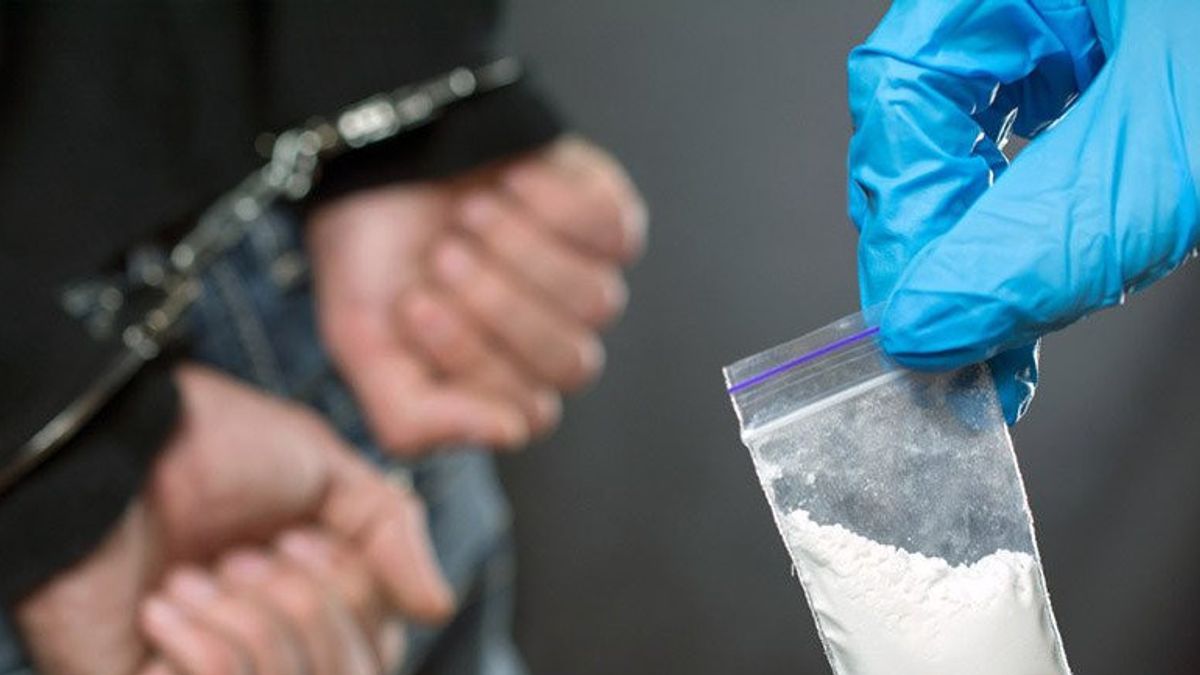
Specifically in plea bargaining for drug offences, we observe that this is a procedural agreement consisting of the defendant’s acceptance of guilt in exchange for a more lenient sentence. The defendant thus benefits by avoiding a lengthy and uncertain evidentiary process which could yield more unfavourable outcomes. This institution, a product of the Anglo-Saxon criminal trial, introduces an express exception to the fundamental principle of our criminal procedural system, namely the principle of pursuit of substantive truth. Consequently, a defendant, although innocent, may, in order to avoid lengthy involvement in court proceedings, admit guilt. Even in such a case, the Single-Member Court of Appeals which, having subject-matter jurisdiction, will examine the bargaining record drawn up further to the agreement between defendant and prosecutor, will not have the right to enter into the merits of the case as to the guilt or innocence of the perpetrator, but only to review the grounds set out in Article 368(b) and (c), namely the statute of limitations, res judicata, etc., and is entitled to alter the legal characterisation of the act only in favour of the defendant. Thus, the Single-Member Court of Appeals is bound by the agreement and its only option is to impose a lower sentence than the one agreed, applying the criteria of Article 79 of the Penal Code (PK).
If, following the aforementioned procedures, an agreement is reached between the defendant and the prosecutor as to the sentence to be imposed, a bargaining record is drawn up which is signed by the prosecutor, the defendant, and the defence counsel present. The bargaining record contains the defendant’s admission, the agreed sentence and the manner of its execution.
Subsequently, within five days from the drawing up of the bargaining record, the case is brought by direct summons before the Single-Member Court of Appeals for felonies and before the Single-Member Misdemeanors Court for misdemeanors. The court, in public session, declares the defendant guilty on the basis of the bargaining record and the case file evidence and imposes a sentence which may not exceed that agreed between the prosecutor and the defendant.
Plea Bargaining – Exceptions
Plea bargaining covers a wide range of offences, both felonies and misdemeanors prosecuted ex officio, with the exception of (a) those carrying life imprisonment, (b) the formation of a criminal organisation, and (c) sexual offences. The admission constitutes consideration for the imposition of a reduced sentence, without excluding compensation of damage, while the reduced sentence does not remove the criminal nature of the treatment of the perpetrator.
As to the sentencing range to be taken into account by the Public Prosecutor of the Court of Appeals when drawing up the bargaining record, in the case of a felony punishable by imprisonment of up to 10 years, the range must be from 2 to 5 years’ imprisonment, and for a felony punishable by imprisonment exceeding 10 years, the corresponding range is from 2 to 7 years’ imprisonment. In the case of a misdemeanor, the relevant sentencing range to be taken into account by the competent Prosecutor is from 10 days to 2 years’ imprisonment. What is of interest in the bargaining process is that the competent Prosecutor may also summon the victim of the act for hearing and may make the success of the bargaining contingent on satisfaction of the damage suffered by the victim from the defendant.
What is Criminal Settlement?
Criminal settlement concerns only specific felonies, namely those of forgery, false certification, theft, embezzlement, fraud, fraud against the EU, breach of trust, smuggling, tax evasion, money laundering from criminal activities, and false sworn declaration, provided that the request for settlement is made before the defendant is referred to trial; if, however, it is made after referral to trial, the criminal settlement may concern the misdemeanor forms of the above offences.
As regards criminal settlement (for the offences for which it may take place), the Prosecutor must, in addition to the defendant, also summon the victim. It is also provided that, in the relevant settlement record, in addition to the defendant’s admission, mention is made that restitution of the property to the victim has taken place or that full satisfaction of the damage specified in the indictment has occurred, and that there is no proposed sentence by the Prosecutor accepted by the defendant, since this is to be imposed by the Court. In the case of attempt, the satisfaction of the victim due to moral damage may not exceed 30,000 euros, while a reservation may be made for claiming any excess value before the Civil Courts. The Prosecutor who handles the criminal settlement procedure is the Public Prosecutor of Misdemeanors, where it is conducted before the defendant’s referral to trial.
Otherwise, if the request is made after referral to trial or before the first-instance Court up to the commencement of the evidentiary proceedings, the Court may adjourn the session and set a deadline of up to 15 days for the parties to draw up the record, in which the defendant’s admission and the full satisfaction of the victim shall be recorded. The Court ratifies the record, declares the defendant guilty by imposing a sentence which, for the felony forms of the offences for which settlement may take place, may not exceed two years’ imprisonment, and in the case of aggravating circumstances may not exceed three years, while in the misdemeanor forms of the offences it may not exceed six and twelve months respectively. The Court has authority to act with regard to the defendant’s pleas and the search for grounds for cessation of criminal prosecution and inadmissibility thereof, in the same manner as in the plea bargaining procedure, in accordance with what has already been set out above, while against its judgment the only legal remedy that may be exercised is cassation.
- See also article Flagrante Delicto Procedure
- See also article Medical Negligence
- See also article Child Pornography
- See also article Defamation
- See also article Bodily Harm
- See also article Narcotics
- See also article Fraud
- See also article Forgery
- See also article Embezzlement
- See also article Negligent Homicide
- See also article Tax Evasion
FREQUENTLY ASKED QUESTIONS ON PLEA BARGAINING FOR DRUG OFFENCES – CRIMINAL SETTLEMENT
1. What sentence do I risk if I accept plea bargaining for drug offences?
In plea bargaining (Article 303 of the Code of Criminal Procedure) the sentencing range is significantly reduced compared to the ordinary penalty threatened. For a felony punishable by imprisonment of up to 10 years, the agreed sentence ranges from 2 to 5 years’ imprisonment. For a felony punishable by imprisonment exceeding 10 years, the range is 2 to 7 years’ imprisonment. In drug cases, where ordinary sentences start from 8 years’ imprisonment and reach life imprisonment, the benefit for the defendant is substantial. The exact sentence proposed depends on the quantity, the type of substance, the defendant’s role and prior record.
2. In which cases is plea bargaining excluded?
The institution of plea bargaining does not apply to three principal categories of offences: offences threatened with life imprisonment, the formation of and participation in a criminal organisation (Article 187 of the Penal Code), and offences against sexual freedom. In drug cases this means that, if the indictment includes professional trafficking by a group of three or more persons constituting a criminal organisation, the path of bargaining is closed. The lawyer first studies the judicial council order or the bill of indictment summons in order to determine whether the indictment permits bargaining and what strategy serves the defendant’s interest.
3. What happens if no agreement is ultimately reached with the prosecutor?
If bargaining fails, the criminal proceedings continue normally as if the application had never been submitted. The law expressly provides that the written application is deemed never to have been submitted, the material formed is destroyed, and any copies are not taken into account at any stage. This provision protects the defendant, so that the admission offered in the context of bargaining will not later be used against him at the courtroom. Despite the express provision, the decision to commence bargaining must be taken with great care and always with the assistance of an experienced criminal defence lawyer.
4. How long does it take from the application to the issuance of the judgment?
The procedure is fairly swift compared with the ordinary criminal trial. After agreement is reached and the bargaining record is drawn up, the case is brought within five days by direct summons before the Single-Member Court of Appeals for felonies or the Single-Member Court of First Instance for misdemeanors. The total time from the submission of the application to the issuance of a conviction generally ranges within a few months, depending on the workload of the prosecutor and the court. Compared with the usual duration of a drug felony trial, which may reach 2-3 years, the time saving is significant.
5. May the court impose a sentence different from the one agreed?
The Single-Member Court of Appeals is bound by the agreement between prosecutor and defendant and does not examine the merits of the case as to guilt or innocence. It reviews only the grounds of Article 368(b) and (c) of the Code of Criminal Procedure, namely statute of limitations, res judicata and other grounds for cessation or inadmissibility of the prosecution. The only possibility for the court to deviate from the agreement is to impose a lower sentence by applying the criteria of Article 79 of the Penal Code, or to alter the legal characterisation only in favour of the defendant. The agreed sentence in essence operates as an upper limit.
6. What is the role of the lawyer in plea bargaining for drug offences?
The role of defence counsel is critical and multi-layered. First, counsel assesses whether it is in the defendant’s interest to direct the specific case to bargaining, or whether there are sound prospects of acquittal through an ordinary trial. Second, counsel examines the case file for gaps, unlawful evidence, or defects in the preliminary procedure that could be exploited in bargaining. Third, counsel negotiates with the prosecutor for the lowest possible sentence, suspension of execution (Article 99 of the Penal Code), or conversion to a monetary penalty. Fourth, counsel represents the defendant in the drawing up of the record and subsequently at the courtroom. The choice of an experienced criminal defence lawyer often determines the difference between a suspended sentence and actual detention.
[3452]6777bet Official Login | বিকাশ ডিপোজিট ও সেরা স্লট গেম,6777bet অ্যাপ ডাউনলোড করে উপভোগ করুন লাইভ ক্যাসিনো ও সেরা স্লট গেম। বিকাশ দিয়ে দ্রুত ডিপোজিট করে আজই আপনার যাত্রা শুরু করুন। visit: 6777bet
[3791]pkoko Official Login | বিকাশ ডিপোজিট ও সেরা লাইভ ক্যাসিনো বোনাস,pkoko অফিসিয়াল প্ল্যাটফর্মে যোগ দিন। এখানে অ্যাপ ডাউনলোড এবং অনলাইন স্লট গেমের সহজ নিয়মাবলী পাবেন। আজই সাইন আপ করে সেরা লাইভ ক্যাসিনো বোনাস লুফে নিন। visit: pkoko
[9741]Kingfun | Đăng nhập tải app game bài đổi thưởng uy tín,Truy cập kingfun để trải nghiệm game bài đổi thưởng uy tín. Hướng dẫn tải app kingfun nhanh chóng và cách nạp tiền qua Momo an toàn. Đăng nhập chơi ngay! visit: kingfun
[4309]Fair login ph – Slots na may free spins at GCash casino,Mag-fair login ph na para sa slots na may free spins. Mag-download ng app at subukan ang casino gamit ang gcash. Alamin din paano maglaro ng baccarat dito. visit: fair